
Parenting Through Challenges: 5 Ways to Stay Calm and Supportive
- Bhanumathi Das Sharma

- Nov 27, 2024
- 3 min read
Updated: Apr 6, 2025
Parenting is one of life’s most rewarding roles, but not without challenges. Whether you’re dealing with toddler tantrums, adolescent defiance, or family upheavals, staying calm and supportive during difficult moments is important for your child’s well-being—and your own.
Why Parenting Challenges Are Inevitable

Parenting isn’t a one-size-fits-all journey. Every child is unique, and so are the challenges they bring. From sleep deprivation during infancy to dealing with peer pressure in adolescence, every stage of parenting comes with its own tests.
Challenges often stem from common triggers like:
Behavioral issues (e.g., tantrums, disobedience).
Academic struggles or school-related stress.
Sibling rivalry or conflicts.
Major life changes, such as divorce, relocation, or financial difficulties.
It’s important to remember that coming across these challenges doesn’t mean you’re failing as a parent—it is simply a part of a beautiful journey.
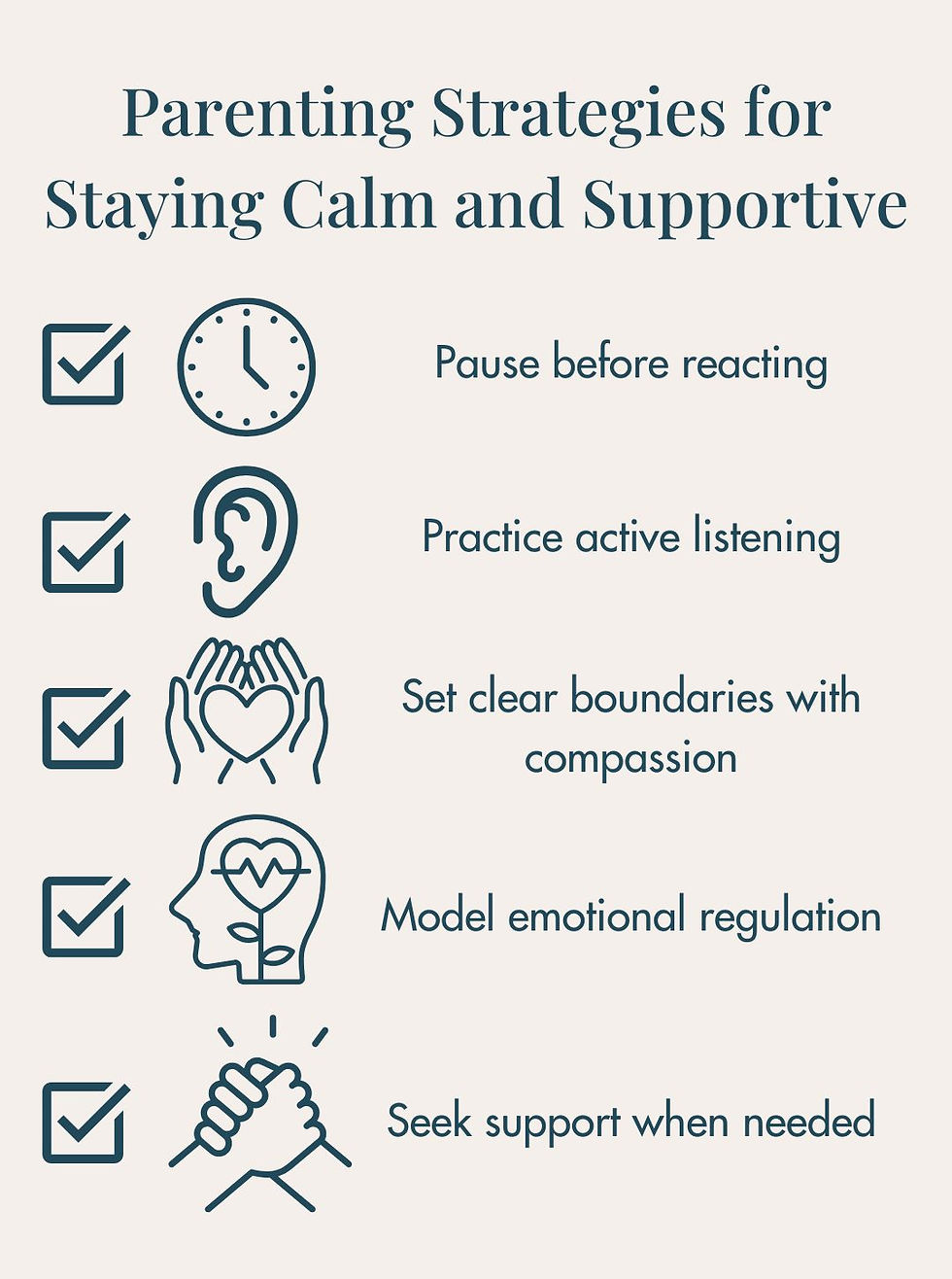
5 Strategies for Staying Calm and Supportive
Pause Before Reacting
In the heat of the moment, it can be easy to let frustration take over. However, reacting impulsively can escalate a conflict.
How to Do It: When faced with a challenging situation, take a deep breath, count to 10, or step away briefly to collect your thoughts.
Why It Helps: Pausing helps you respond thoughtfully rather than emotionally, fostering a more constructive resolution.
Practice Active Listening
Children often act out because they feel unheard or misunderstood. Active listening can bridge this gap.
How to Do It: Focus on your child when they’re speaking, make eye contact, and avoid interrupting. Use validating phrases like, “I understand why you feel this way” or ask open-ended questions such as, “What can we do to make this better?”
Why It Helps: Listening attentively builds trust and helps children feel valued, making them more likely to cooperate.
Set Clear Boundaries with Compassion
Boundaries provide structure and security for children, but enforcing them harshly can damage your bond.
How to Do It: Communicate rules clearly and explain the reasons behind them. For example, instead of saying, “Because I said so,” you could say, “We need to turn off screens at 8 PM so you can get enough rest for school.”
Why It Helps: Compassionate enforcement ensures that boundaries are respected without creating resentment.
Model Emotional Regulation
Children look to parents for cues on handling emotions. By modeling calm and controlled behavior, you teach them how to manage their feelings.
How to Do It: During stressful moments, verbalize your process: “I’m feeling frustrated right now, so I’m going to take a deep breath before I respond.”
Why It Helps: Demonstrating self-regulation empowers your child to develop similar skills.
Seek Support When Needed
No parent can—or should—do it all alone. Seeking support is a sign of strength, not weakness.
How to Do It: Talk to trusted family members or friends, join a parenting group, or consult a professional like a family counselor or parenting coach.
Why It Helps: External perspectives and resources can provide valuable insights and reduce feelings of isolation.
Common Pitfalls to Avoid
Even the most well-intentioned parents can fall into unhelpful patterns. Some common pitfalls include:
Overreacting: Losing your temper can worsen conflicts. Practice mindfulness to stay composed.
Inconsistency: Children thrive on predictability. Ensure rules and consequences are consistent.
Dismissing Emotions: Saying things like, “Stop crying, it’s not a big deal,” can invalidate your child’s feelings. Instead, acknowledge their emotions and offer comfort.
Avoiding these pitfalls requires self-awareness and a willingness to reflect on your parenting approach.
When to Seek Professional Help
Sometimes, parenting challenges may require professional intervention. Consider seeking help if:
Conflicts or behavioral issues persist despite your efforts.
Family dynamics are strained, leading to constant stress.
You feel emotionally exhausted or burned out.
Family counselors and parenting coaches can provide tailored guidance to help you navigate these challenges effectively.
Parenting through challenges is no easy feat, but it’s also an opportunity to grow closer to your child and strengthen your relationship. Remember that no parent is perfect, and every challenge you face is a step toward becoming a more resilient and empathetic caregiver.
By staying calm, supportive, and proactive, you can navigate even the toughest parenting moments with grace. You’ve got this!


Comments